
Electron probe micro-analyzer (EPMA)
Electron probe micro-analyzer (EPMA)
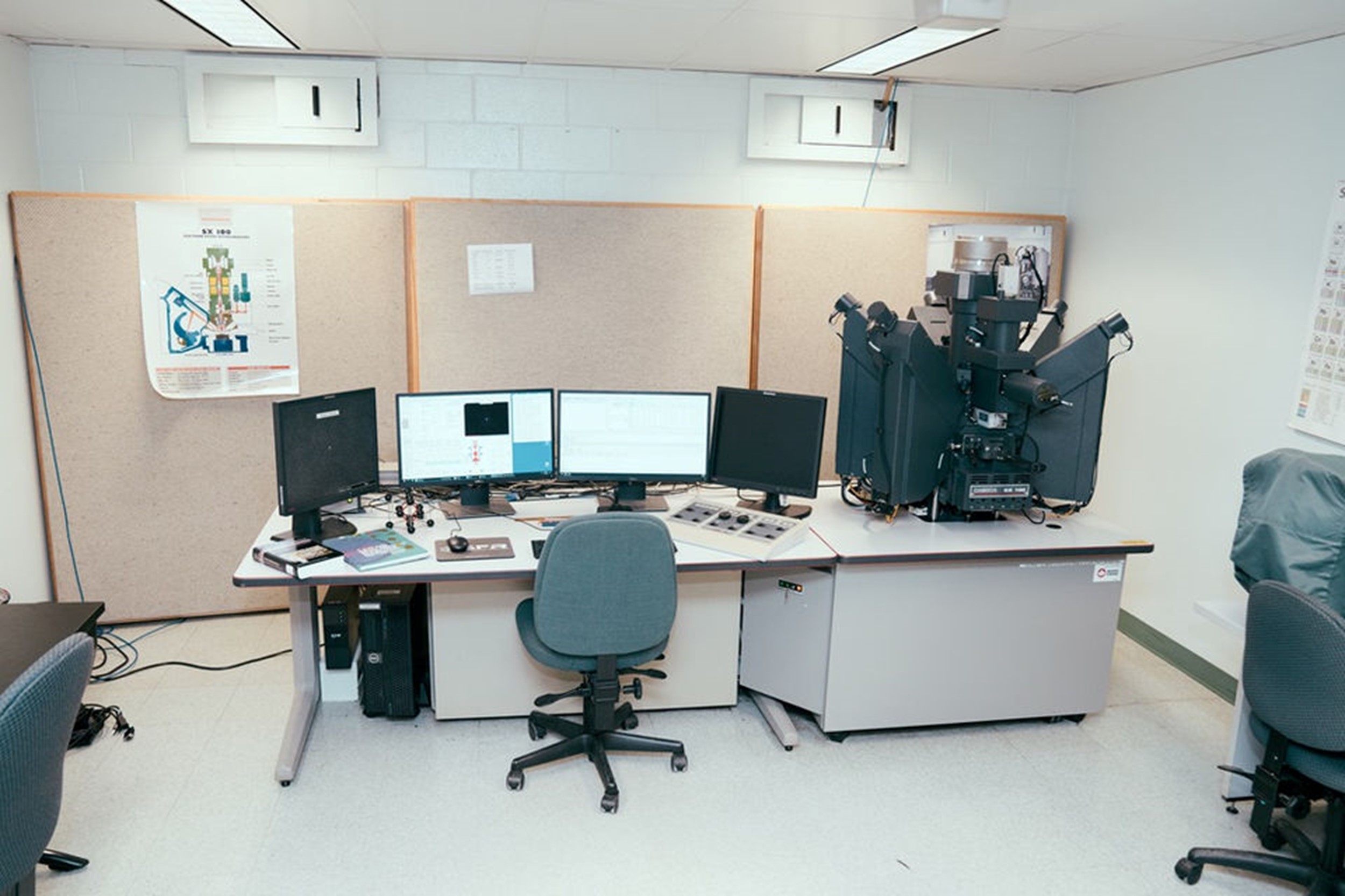
| MANUFACTURER | CAMECA |
|---|---|
| MODEL | SX-100 |
General description:
The electron probe micro-analyzer (EPMA), also known as microprobe, is a non-destructive method used to determine the chemical composition of solid samples. EPMA works by bombarding a micro-volume of a sample with a focused electron beam (typical energy = 5-30 keV) and collecting the X-ray photons thereby emitted by the various elemental species. Because the wavelengths of these X-rays are characteristic of the emitting species, the sample composition is determined by recording WDS spectra (Wavelength Dispersive Spectroscopy). The primary importance of an EPMA is the ability to acquire precise, quantitative elemental analyses (as low as 50 ppm) of the majority of the elements (from boron to plutonium) of a complex sample of very small spot sizes (1-2 µm).
Applications:
The spatial scale of analysis, combined with the ability to create detailed images of the sample, makes it possible to analyze a multitude of solid samples such as rocks and minerals, metals and alloys, glass, optical fibers, ceramics, semiconductor materials, concrete, cement.

To use this equipment
The equipment available is accessible to the academic and industrial research community.
To learn about usage conditions and availability, please fill out the form below. After reviewing your request, we will contact you shortly to offer you the best available solution.